Yes, a VA loan can potentially be assumed by another buyer. But the rate isn't the only thing that matters. Here's what happens to the seller's entitlement, liability, and equity.
Here's one of the most interesting parts of a VA loan that a lot of people don't know exists.
VA loans can be assumable.
That means instead of getting an entirely new mortgage, a qualified buyer may be able to take over the seller's existing VA loan.
Same loan.
Existing balance.
Existing interest rate.
That last part is why assumptions can get really damn interesting.
But before somebody sees a low rate and starts packing boxes, there are a few things you need to understand.
What Is a VA Loan Assumption?
A VA loan assumption is essentially a transfer of the existing VA mortgage obligation from the current borrower to a qualified buyer.
VA itself describes assumption as a buyer taking over the seller's VA-backed mortgage rather than opening a completely new mortgage loan.
This isn't simply:
"Hey, take over my payments."
There's an actual approval process.
For most modern VA loans, the assumption needs to be approved through the appropriate VA-approved process, and the person assuming the loan must demonstrate creditworthiness. Benefits
That's an important distinction.
Why Would Someone Want to Assume a VA Loan?
Here's where it gets interesting.
Imagine a Veteran bought a home several years ago with a VA loan at a significantly lower interest rate than rates available today.
They decide to sell.
A buyer may be able to assume that existing mortgage instead of replacing it with a brand-new loan at current market rates.
The potential value isn't complicated.
A lower interest rate can mean a lower monthly payment.
Depending on the loan balance and current market, that can be a hell of an advantage.
But there's another number we need to talk about.
What Happens to the Seller's Equity?
This is the part people sometimes miss.
The buyer isn't necessarily assuming the purchase price.
They're assuming the remaining VA loan balance.
Let's use simple numbers.
Home sells for:
$500,000
Existing VA loan balance:
$350,000
Difference:
$150,000
That $150,000 doesn't magically disappear.
The buyer generally has to figure out how to cover the difference between the purchase price and the assumed loan balance.
That could involve cash or another permissible financing structure depending on the transaction.
So yes, a 3% mortgage might look sexy as hell.
But if you need $150,000 to bridge the equity gap, we still have some math to do.
Does the Buyer Have to Be a Veteran?
Not necessarily.
This one surprises people.
VA guidance says any purchaser may potentially qualify to assume a VA loan, subject to the applicable approval and credit requirements. Benefits
But here's where it gets more complicated.
Whether the buyer is an eligible Veteran can make a massive difference to the seller's VA entitlement.
And that matters.
A lot.
What Happens to the Seller's VA Entitlement?
This is probably the most important part of the entire article.
An approved assumption does not automatically restore the original Veteran's entitlement.
If an eligible Veteran assumes the loan and has sufficient VA entitlement, that buyer may be able to substitute their entitlement for the seller's.
VA calls this Substitution of Entitlement. Benefits
When the requirements are satisfied, that can free the original Veteran's entitlement.
But if the buyer isn't substituting their VA entitlement?
The original Veteran's entitlement can remain tied to that loan.
That's a pretty damn important detail if the seller wants to use their VA benefit to buy another house.
I've already gone deeper into how entitlement works in:
VA Loan Entitlement Explained Without the Bullshit
And if you're wondering whether you can have another VA loan while one is still outstanding:
Can You Have Two VA Loans at the Same Time?
Those are worth understanding before you agree to anything.
What Is a Release of Liability?
Here's another phrase every VA seller should understand.
Release of Liability.
You don't want to transfer your house to somebody else and just assume you're magically no longer responsible for the mortgage.
VA servicing guidance says a borrower remains liable for the VA-guaranteed mortgage debt unless they're released from personal liability. For loans originated on or after March 1, 1988, assumptions generally require prior approval from VA or an authorized VA lender.
That means there are really two separate questions:
Am I being released from liability?
And:
Is my VA entitlement being restored?
Those are not the same damn thing.
VA specifically notes that a release of liability doesn't by itself release the Veteran's entitlement unless an eligible Veteran assuming the loan substitutes their entitlement.
That distinction matters.
Does the Buyer Have to Qualify?
Yes.
An assumable mortgage doesn't mean somebody can simply take over the loan because they like the payment.
For applicable VA assumptions, the purchaser's creditworthiness has to be evaluated through the assumption process.
The existing loan servicer is a major player here.
VA's handbook says assumptions are processed by the current loan holder or servicer, and borrowers or purchasers should be referred there for processing. Benefits
So this isn't something the buyer and seller just work out over beers and Venmo.
There is a process.
Can Assuming a VA Loan Be a Great Deal?
Absolutely.
But you have to look at the whole transaction.
Not just the rate.
You need to understand:
The remaining mortgage balance.
The sales price.
The seller's equity.
How the equity gap will be covered.
The assumption requirements.
The seller's release of liability.
And what happens to the seller's VA entitlement.
That's the difference between finding a legitimately great opportunity and getting hypnotized by a low interest rate.
What If the Seller Wants to Use Their VA Benefit Again?
Then we need to understand what happens to their entitlement before the transaction closes.
VA says previously used entitlement may be restored in several situations, including when the original property is sold and the VA loan is paid in full or when a qualified Veteran buyer assumes the loan and substitutes sufficient entitlement for the seller's.
And even when full restoration isn't available, a Veteran may still have remaining entitlement available for another VA purchase. Benefits
That's why you don't just ask:
"Can somebody assume my loan?"
The better question is:
"What does this assumption do to my ability to use my VA benefit again?"
Now we're asking the right damn question.
The Bottom Line
VA loan assumptions can be incredibly valuable.
Especially when the existing mortgage has an interest rate substantially below the current market.
But the interest rate is only part of the story.
If you're the buyer, understand the loan balance, equity gap and qualification requirements.
If you're the Veteran selling the home, understand both your release of liability and what happens to your VA entitlement.
Those two things aren't automatically the same.
And that's exactly why you want to understand the entire transaction before somebody tells you:
"Don't worry. They can just assume your VA loan."
Maybe they can.
Let's figure out what actually happens after they do.
You earned the benefit. Understand the damn thing before you give any part of it up.
If you're trying to figure out what your VA benefit can do, start with my complete VA Loan Guide.
Have a Mortgage Question? Ask Jimmy.
Buying a house, refinancing, or trying to figure out your options? I’ve spent years helping people navigate this stuff. Tell me what you’re working on and let’s figure it out.
Keep Reading
More mortgage answers. Less bullshit. Here’s what you should know next.

How Much Money Do You Actually Need to Buy a House?
You don’t necessarily need 20% down to buy a home. But your down payment isn’t the only expense. Here’s how closing costs, earnest money, and cash to close actually work.
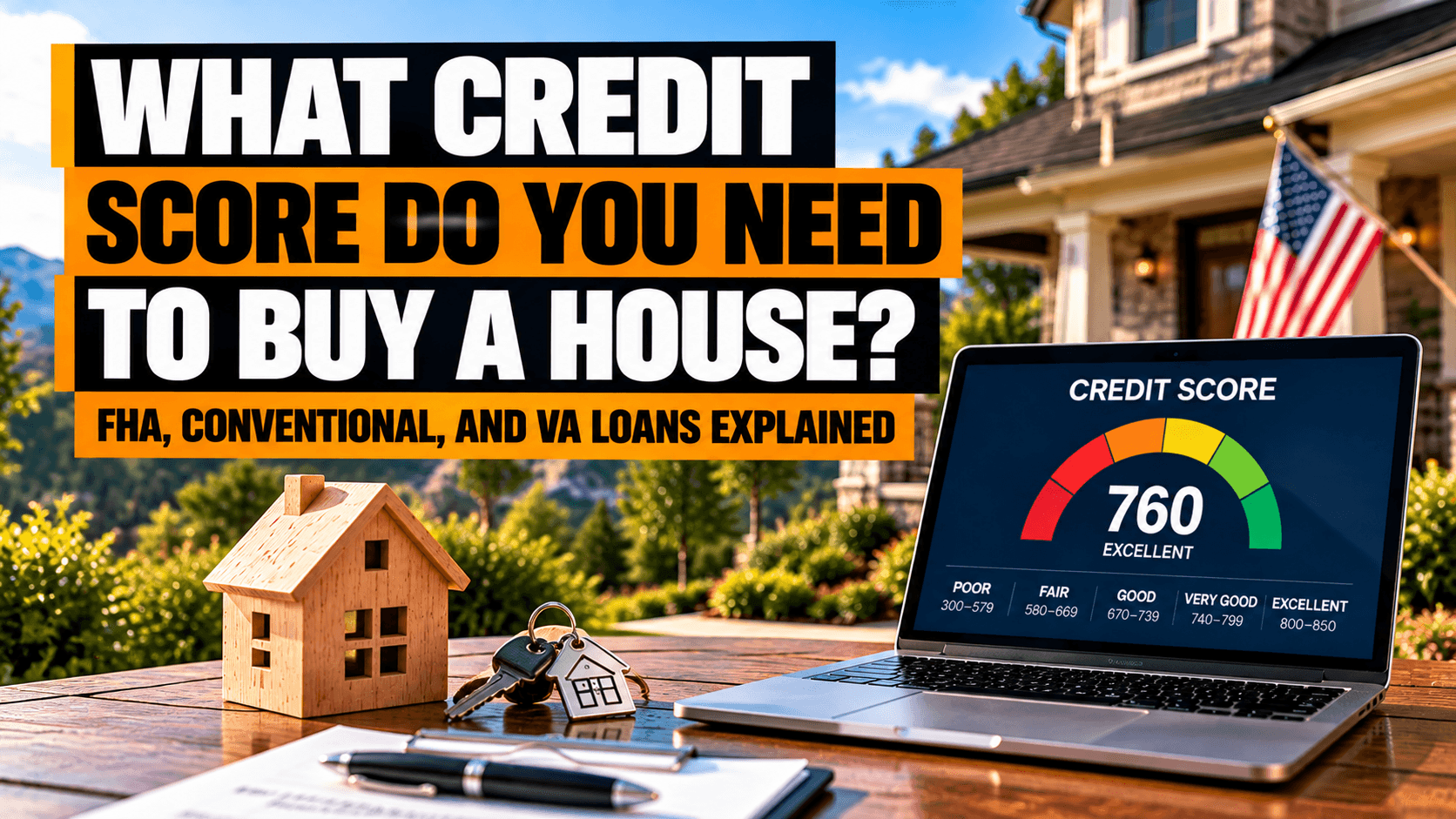
What Credit Score Do You Need to Buy a House?
Think you need perfect credit to buy a house? You don’t. Here’s how credit scores work for FHA, conventional, and VA loans and why your score is only part of the conversation.

How Much House Can I Actually Afford?
Just because a lender approves you for a certain amount doesn’t mean you should spend it. Here’s how to figure out what house payment actually makes sense for your life.